mrsentry
⌘
Full-repository context
It clones the repo at the exact MR head and reads the enclosing function, imports and related symbols. Before claiming anything about other files, it checks them with read_file, grep and find_symbol.
AI code review for GitLab · vulnerability auto-fix for AWS ECR
Inline comments on the exact line, from a model that checked other files first. Container CVEs traced to the dependency that brings them in, then fixed.
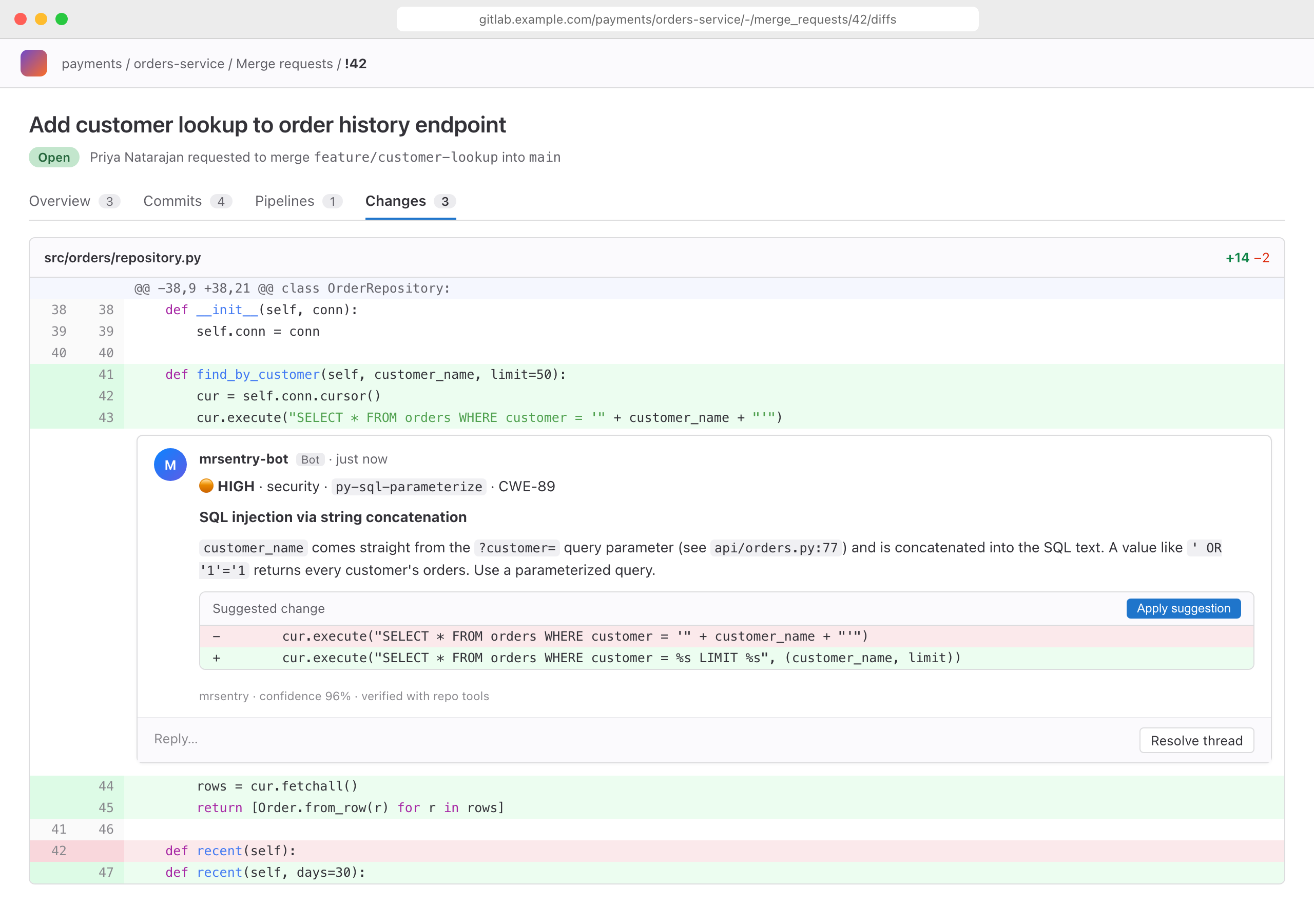
mrsentry posts fewer, better comments. Each one is checked against your code before it reaches the merge request.
It clones the repo at the exact MR head and reads the enclosing function, imports and related symbols. Before claiming anything about other files, it checks them with read_file, grep and find_symbol.
Every finding has to quote the code it's about, and the quote is matched against the real line. If they don't match, the finding is dropped. A critic pass then removes noise and duplicates.
VerificationRe-runs never post the same comment twice. When an issue is fixed, its thread is resolved. There's one overview note, edited in place, and diffs that haven't changed aren't reviewed again.
Re-runsIt detects basic or enhanced scanning, and on-push or continuous, for each repository. Stale results get a rescan or a local Trivy/Grype scan, so teams on scan-on-push aren't working from old data.
ECR scanningMaps each finding to the exact path in your dependency graph across Maven, Gradle, npm, pnpm, yarn, Poetry, uv and pip, whether it's a direct dependency or five levels deep.
Dependency mappingIt upgrades the smallest version that fixes the issue, preferring a bump of the direct parent and pinning only when it has to. Then it regenerates lockfiles, re-resolves the graph to prove the vulnerable version is gone, and runs your build. If the upgrade breaks the build, the AI repairs it inside a sandbox.
Verify and repairAgent tools are confined to the checkout. Build commands never see your GitLab or AWS credentials. Repo config from the MR can't redirect your LLM.
Security modelA verdict, a summary of the change, severity counts, and links to every thread. Below that, a security section showing how ECR scans this repository, how old the data is, and which dependency brings in each CVE.
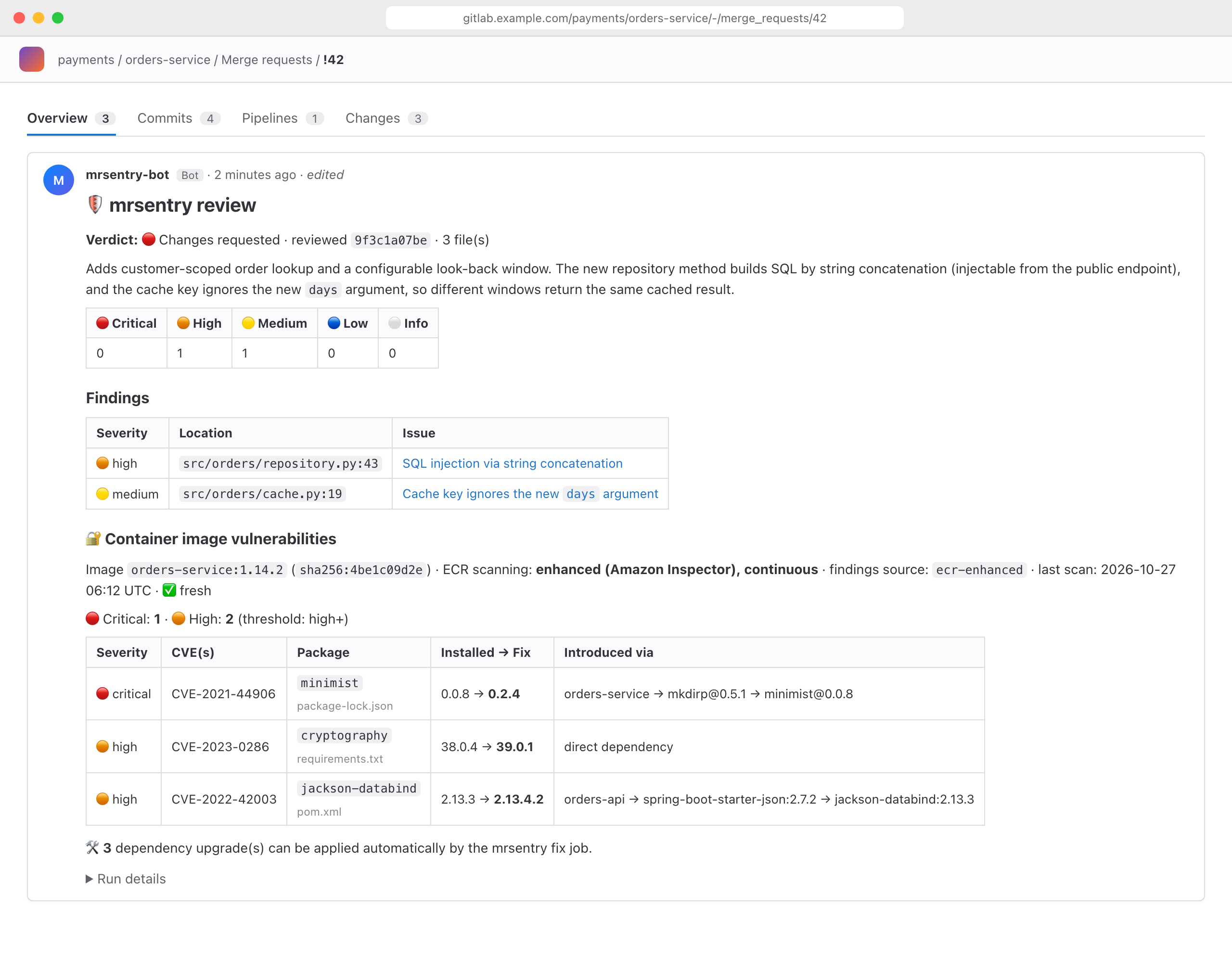
mrsentry follows a vulnerable package back through the dependency graph to the manifest you own, then picks the least invasive fix.
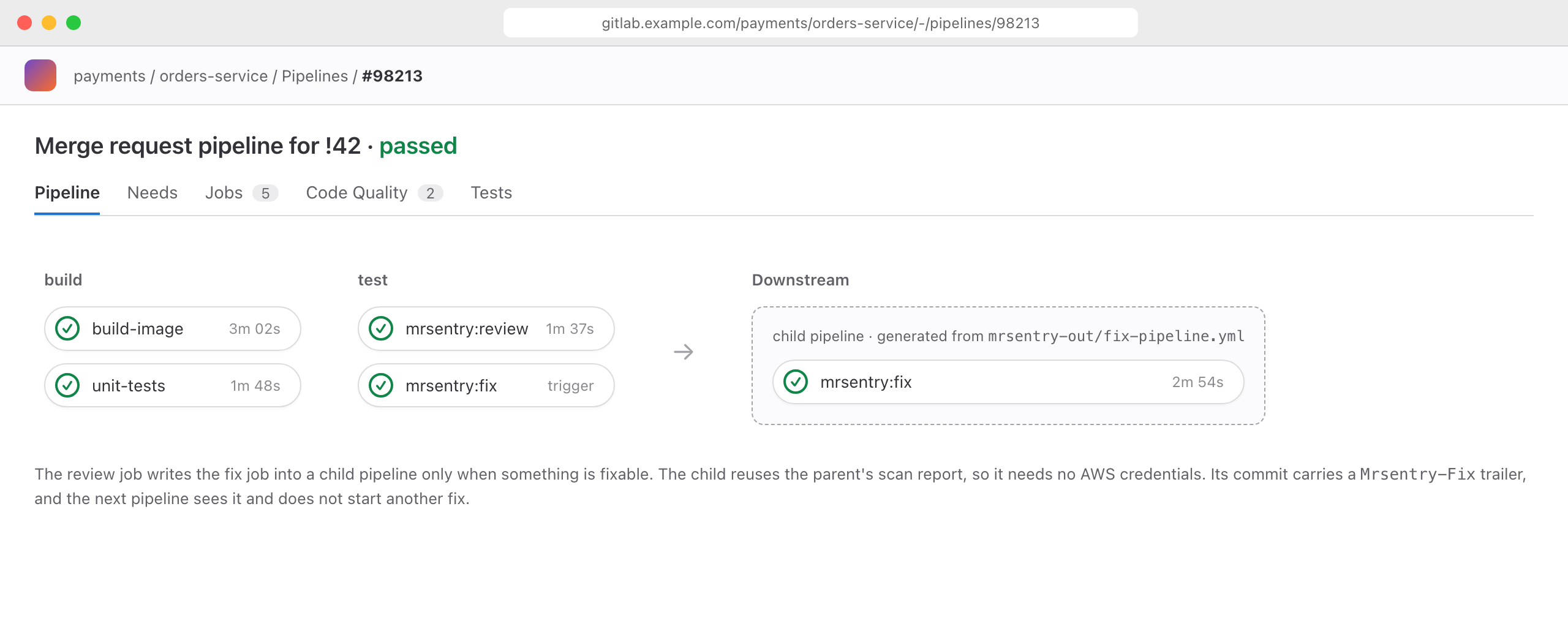
Choose per pipeline: open a new fix MR, or push the fix straight into the MR under review.
mrsentry::needs-human.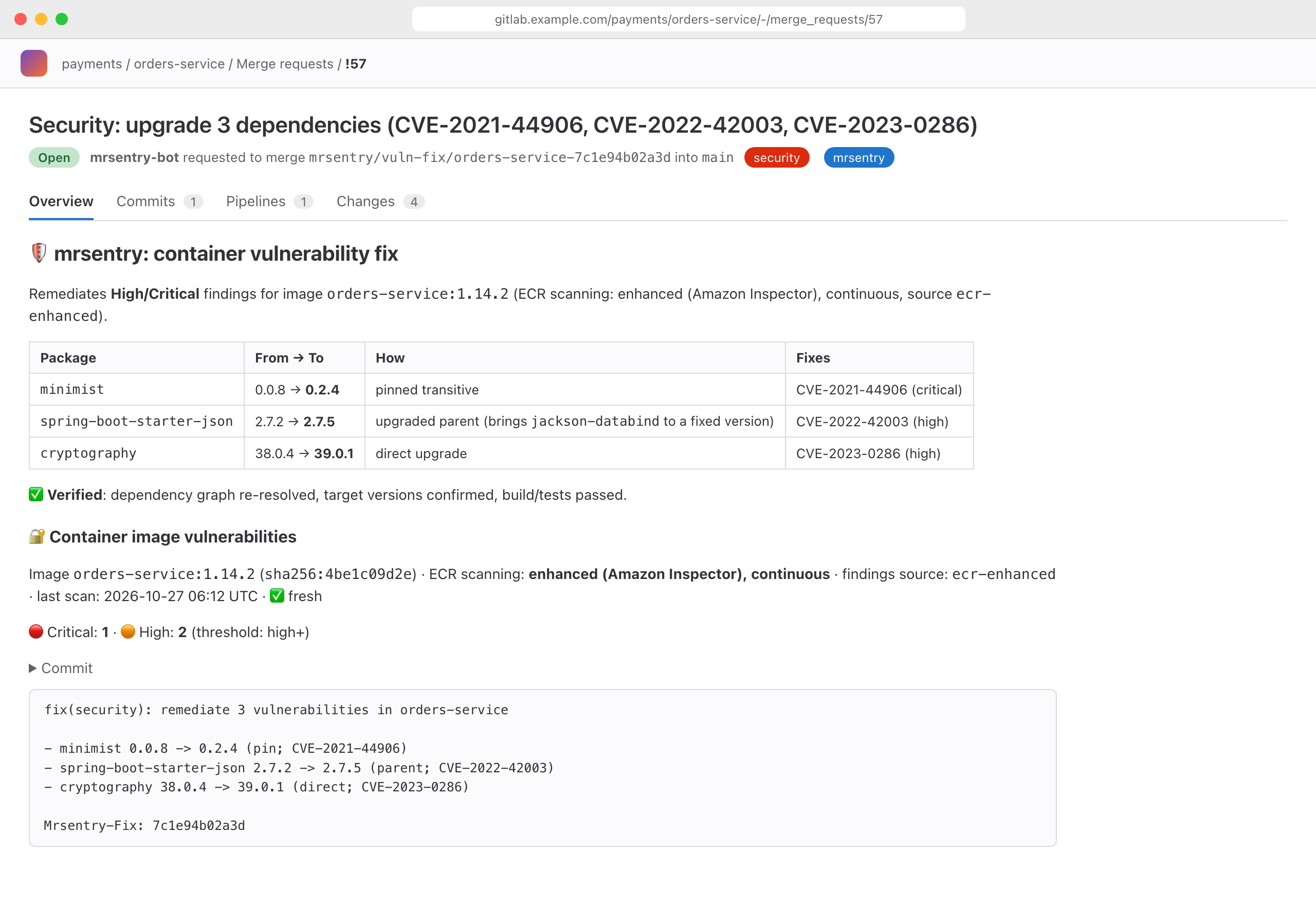
Teams configure ECR differently. mrsentry reads the effective configuration for each repository and decides how far to trust the findings.
Named profiles, a different model per task, automatic fallbacks and a hard cost limit for each run. API keys stay in environment variables.
Use a strong model for the review, a cheaper one for the critic pass, and keep a LiteLLM proxy as a fallback for rate limits.
Provider recipesllm: profiles: default: model: bedrock/us.anthropic.claude-sonnet-4-5-20250929-v1:0 azure: model: azure/gpt-4o-review api_base: https://acme.openai.azure.com api_key_env: AZURE_OPENAI_API_KEY proxy: model: litellm_proxy/claude-sonnet api_base: https://litellm.internal roles: { review: default, summarize: azure } fallbacks: [proxy] max_cost_usd_per_run: 5
Merge request pipelines review the change and fix it inside the MR. Scheduled pipelines open a fix MR from the latest image scan without running a review.
include:
  - project: platform/mrsentry
    ref: main
    file: templates/ci/mrsentry.gitlab-ci.yml

variables:
  MRSENTRY_IMAGE: registry.example.com/mrsentry:full
  # ECR repo name or full URI; enables scan + fix
  MRSENTRY_ECR_IMAGE: orders-service
  MRSENTRY_FIX_WHEN: on_success  # or manual
Debian, Ubuntu, Amazon Linux 2 and 2023, RHEL and macOS. The installer sets up its own Python, so the distro's version doesn't matter. There are also slim and full Docker images with every toolchain included.
Run mrsentry doctor to check your token scopes, LLM access, AWS identity and ECR scanning setup in a few seconds.
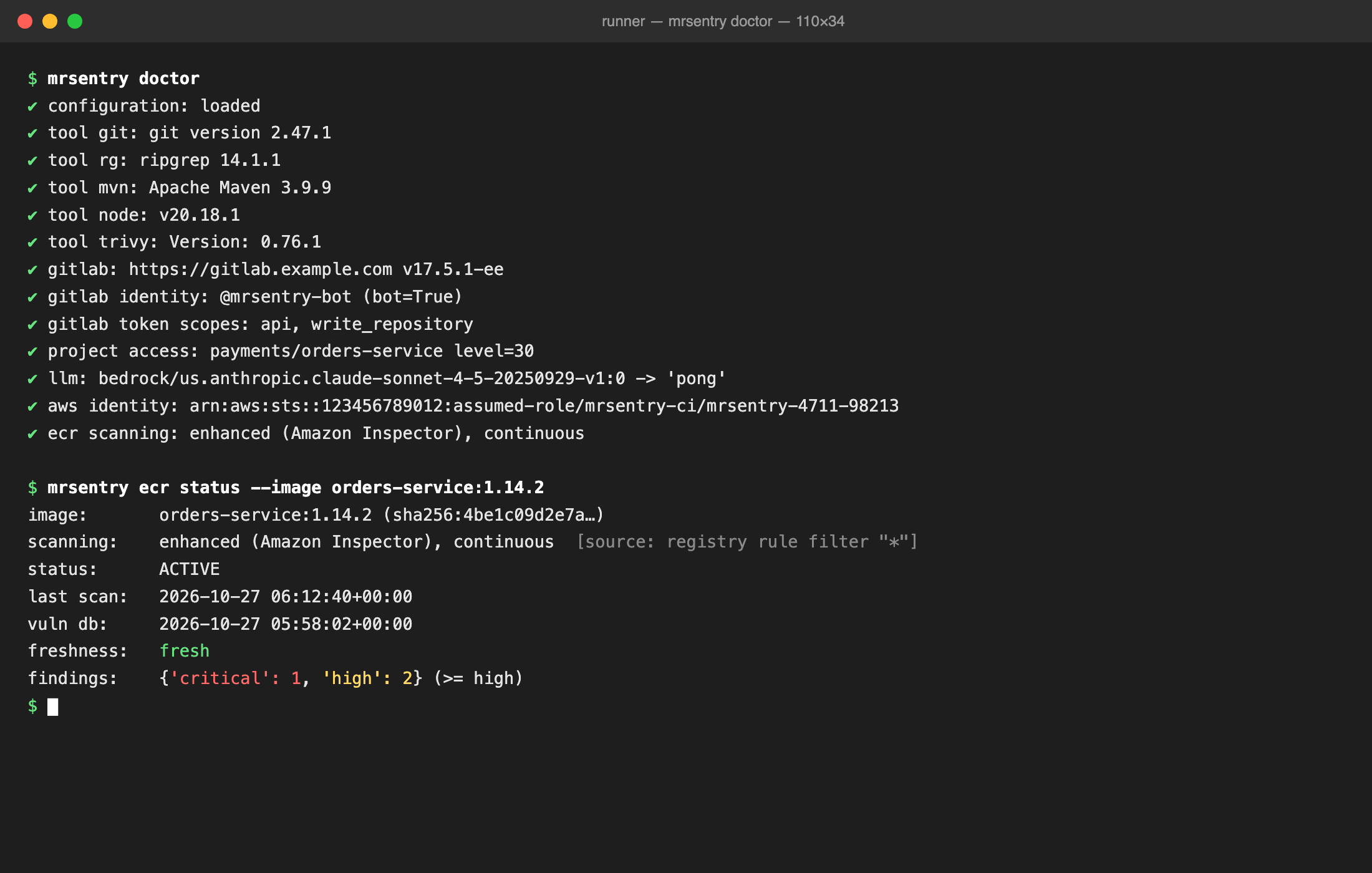
Install it, add a token, and run your first review in under five minutes.
curl -fsSL https://raw.githubusercontent.com/devops-monk/mrsentry/main/install.sh | sh